

The Takaichi Cabinet’s Initiative to Deregulate Working Hours
Sanae Takaichi, who assumed office as Japan’s Prime Minister in October 2025, has positioned “deregulation of working hours” as one of her key policy priorities. On October 21 of that year, the Prime Minister instructed the Minister of Health, Labour and Welfare and other relevant ministers to examine revisions to working hour regulations from the perspective of addressing the current situation where workers “want to work but cannot.”
In subsequent parliamentary deliberations, the Prime Minister expressed concern that “some people are damaging their health by forcing themselves to take on side jobs to earn living expenses due to reduced overtime pay.” She also noted that “companies are over-complying with current working hour regulations, creating a significant gap between what workers could actually work and what they are permitted to work.”
Furthermore, at the “Japan Growth Strategy Council” held on November 10 of the same year, “labor market reform,” including examination of working hour legislation, was positioned as one of the priority policy measures.
Overview of Current Legal Framework
Japan’s working hour regulations underwent substantial revision through the “Work Style Reform Related Acts” implemented in 2019. Prior to the enforcement of these laws, there were no legal provisions regarding overtime limits, and social issues such as karoshi (death from overwork) stemming from long working hours had attracted significant public attention.
The current system establishes strict limits as follows:
- Statutory Working Hours and Statutory Days Off (Unchanged)
In principle, working hours are limited to 8 hours per day and 40 hours per week, with at least one day off per week as a general rule.
When employers require workers to perform overtime work or work on statutory days off, they must conclude a labor-management agreement based on Article 36 of the Labor Standards Act (hereinafter referred to as the “Article 36 Agreement”) and file it with the competent Labor Standards Inspection Office. - Newly Established Overtime Limits
Even when an Article 36 Agreement has been concluded and filed, the following limits cannot be exceeded:- Under normal circumstances: Overtime work is limited to 45 hours per month and 360 hours per year.
- When there are temporary special circumstances and labor and management reach an agreement:
- Overtime work must not exceed 720 hours per year
- The total of overtime work and holiday work per month must be less than 100 hours
- The total of overtime work and holiday work must not exceed 80 hours per month on average over any 2 to 6 month period
- Overtime work may exceed 45 hours per month for a maximum of 6 months per year
- Employers who exceed these limits may face imprisonment for up to 6 months or a fine of up to 300,000 yen.
Impact of Regulations and Current Challenges
Japan’s average annual total actual working hours have steadily declined since the implementation of the 1988 revised Labor Standards Act, which reduced statutory working hours. Additionally, during the COVID-19 pandemic that began in 2020, Japan and other countries experienced significant reductions in working hours due to declining labor demand. Following the pandemic, Japan has continued to show a slower recovery in working hours compared to other countries, with the 2019 overtime limits mentioned above cited as one contributing factor.
Meanwhile, Japan’s labor shortage situation has become increasingly severe. Across various industries including food service, hospitality, manufacturing, and delivery services, situations have emerged where companies cannot meet demand due to inability to secure personnel, and in some cases, companies have gone bankrupt due to labor shortages. These circumstances also form part of the background to the current examination of regulatory relaxation.
Public Opinion Trends
What, then, is Japanese public opinion regarding the deregulation of working hours?
Both the Nikkei and TV Tokyo opinion poll (conducted October 24-26, 2025) and the JNN opinion poll (conducted November 1-2, 2025) showed that approximately 64% of respondents support deregulation of working hours.
However, responses to the question “Do you want to increase your own working hours?” present a different picture. According to the “National Employment Status Panel Survey” conducted by the Recruit Works Institute in January 2025, the proportion of people who answered that they wanted to “increase” their working hours “beyond current levels” was only 6.7% among regular employees and 12.9% among all employees including non-regular workers. Furthermore, according to materials prepared by the Ministry of Health, Labour and Welfare, the proportion of people who want to “work more,” calculated based on various statistics and surveys, stands at only 6.4% of employed persons.
These results suggest a trend where people show understanding toward institutional deregulation, while the proportion of individual workers who actually desire increased working hours remains modest.
Additionally, the aforementioned Ministry of Health, Labour and Welfare materials indicate that approximately half (3.3%) of those who want to “work more” are non-regular workers working less than 35 hours per week and earning less than 2 million yen annually. The Ministry analyzes that there exists a certain number of part-time workers who wish to work without being constrained by the so-called “income barrier” (note: a phenomenon where exceeding a certain income level triggers tax and social insurance obligations, resulting in decreased take-home pay).
The Work Style Reform Related Acts are scheduled for review approximately five years after their 2019 implementation, and the Ministry of Health, Labour and Welfare’s advisory councils are currently undertaking reconsideration of the system, including working hour regulations.
The debate surrounding deregulation of working hours encompasses fundamental issues for Japanese society—balancing labor shortages with worker protection—and will likely remain a topic of high interest going forward.
Professional Team

Chih-Poung Liou

Sophia Lelong

Su-Yin Liu
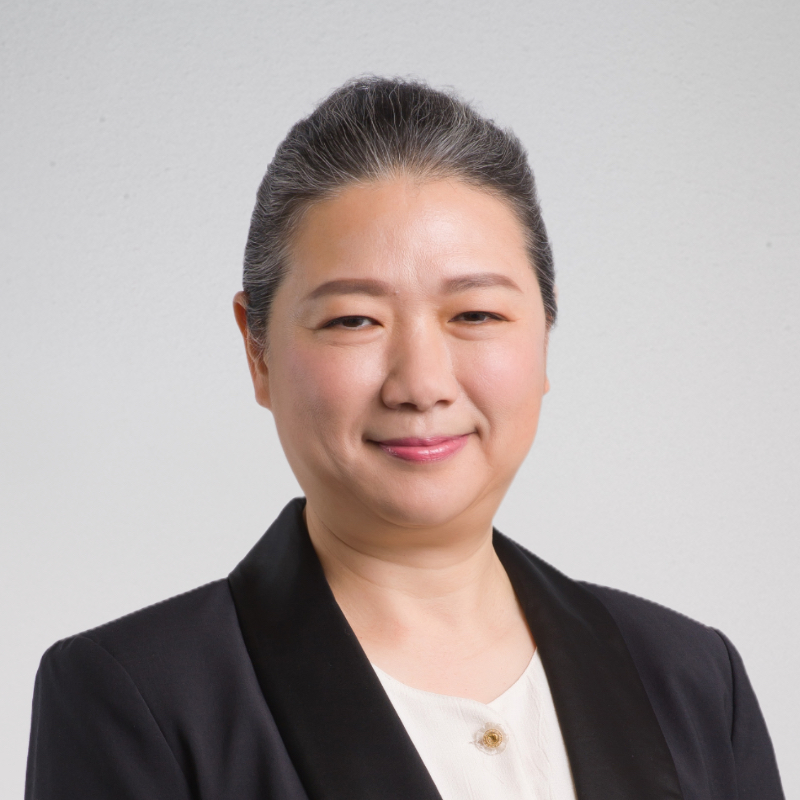
Anne W. Chen

Hung-Yi Kuo

Yu-Jung Lee

Dawn Lee

Frank Liao

Chelsea Lai

Ariel Hung

Peiying Lin

Cheng-Wei Dai

Kuo-Yao Tai
